

Preparing Your Lawn for Spring
Wisconsin lawns are dominated by cool-season grasses that have a longer recovery after winter of snow cover, frozen soils, and fluctuating thaw cycles. This generally means that you should be taking a slower approach and not try to overstimulate the growth too soon. University of Wisconsin guidance for early spring notes that timing should follow soil thaw, green-up, and actual lawn growth rather than the first warm day of the year, which we have been recently encountering.
General Guidelines on Spring Lawn Care
Wait until the lawn is actually ready before any activity or fertilization, as saturated soils and tender new growth are vulnerable to traffic and mechanical damage. Spring conditions can vary widely from southern to northern Wisconsin, so the right calendar date in Madison may be too early for Eau Claire or Minocqua. A good rule is to let the lawn dry out, watch it resume active growth, and resist the urge to “clean up” aggressively the first sunny weekend.
When the lawn has dried enough to walk on without leaving ruts, you can start with a light cleanup. Raking matted leaves, branches, and winter debris so sunlight and air can reach the turf is recommended as the first step. This is also the time to inspect for snow mold, salt injury near driveways, plow scars, and compacted areas from winter traffic. Cleanup should be light – you are trying to lift debris off the grass, not tear crowns out of soil that is still soft. Wisconsin Extension’s spring guidance stresses sequence and restraint, not aggressive early-season renovation.
Mowing and Fertilizing
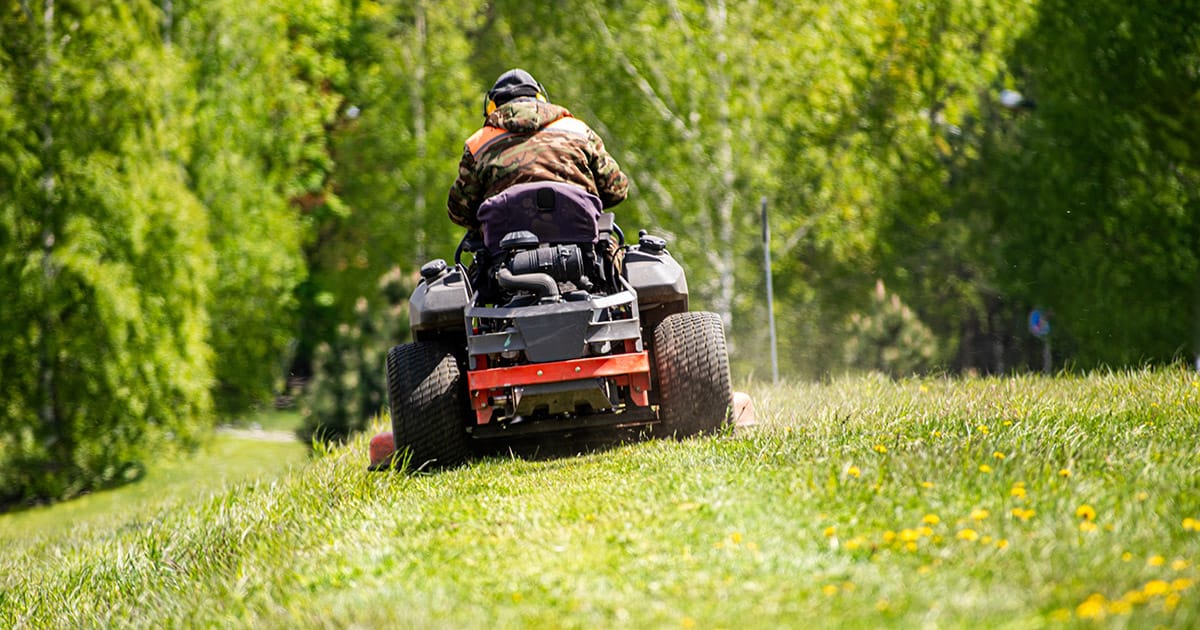
Mowing will keep the lawn healthy, and the recommended mowing range is about 2½ to 3½ inches. The “one-third rule” applies: never remove more than one-third of the blade at a time. Taller mowing helps shade the soil, reduces stress, and can help suppress weed germination. Because spring growth can be fast, mowing frequency should follow growth, not the calendar. Simple recommendation for the first mow is to actually look at your lawnmower. Sharpening the blades before the season starts will prevent tearing grass and allow you to cut it cleanly. Many homeowners don’t know that frayed leaf tips, a whitish cast across the lawn, make it more susceptible to drought and disease stress.
Fertilizing is where most early issues occur. A lawn can look very green after a heavy spring feeding, but too much fertilizer too early encourages top growth at the expense of roots, which can create problems later in the season. The recommended spring approach is moderate nitrogen, not a “blast” of quick growth. This is where working with a professional really pays off. The Madison Landscape team can help you establish the right feeding schedule, which, in the long term, will keep your grass healthy all season, long into the fall.
The general rule for Wisconsin is about one pound of actual nitrogen per 1,000 square feet for a spring application. Waiting until the lawn has been mowed twice before fertilizing is recommended. Controlled-release nitrogen sources are preferred because they avoid flushes of growth.
Since many Wisconsin soils already contain sufficient phosphorus and potassium for established turf, a soil test is often the smartest way. Our team can help you develop a comprehensive plan customized to your soil types.
If weeds were a problem last year, spring is the season to think preventively. Crabgrass becomes especially aggressive when lawns thin out in hot, dry weather. Applying pre-emergent control when soil temperatures are around 55°F, typically from mid-April into mid-May, depending on conditions. Keeping mowing height at 3 inches or higher also helps reduce crabgrass germination.
Spring is a good time for touch-up seeding in thin spots, but not necessarily the best time for rebuilding an entire lawn. If you seed in spring, roughen the soil surface first and keep expectations realistic.
Aeration and Watering
Aeration is another area where timing and diagnosis matter, so talking to Madison Landscape Construction experts would be a great first step. Not every lawn needs it every spring. Core aeration is most helpful where you have genuine compaction, poor infiltration, or high traffic. It should not be done during hot, dry periods when exposed soil can dry turf out. It is best to treat aeration as a targeted response to compaction, not an automatic annual ritual. A lawn that feels hard underfoot, puddles easily, or has thinned in traffic lanes may be a better candidate than a healthy lawn that simply came out of winter looking dull.
Watering usually does not need to be a major spring focus because soils are often moist from snowmelt and spring rains. The goal is not to force lush growth early but to support steady recovery. Overwatering in cool weather can be as counterproductive as overfertilizing. A healthier spring lawn generally comes from mowing correctly, feeding moderately, addressing compaction only where needed, and avoiding unnecessary stress while roots are still catching up. Cool-season turf naturally grows most actively in spring and fall, with summer as the stress period to prepare for.
This is also where working with a landscaping or lawn care company can make real sense. Spring timing is narrow and weather-dependent. A good professional can help you avoid dethatching too early, fertilizing before the lawn is actively growing, using the wrong weed-control window, or applying phosphorus where it is not appropriate.
The Madison Landscape Construction team can be especially valuable for larger properties, uneven terrain, drainage issues, or lawns with a history of patchiness and weeds. We can coordinate soil testing, calibrated fertilizer application, pre-emergent timing, core aeration, and mowing-height adjustments into one seasonal plan. Reach out today to contact us.